Improving English listening skills can be challenging, especially when native speakers talk quickly, connect words, or use unfamiliar expressions. Many English learners understand written sentences perfectly but struggle to recognize the same words in real conversations. Fortunately, daily dictation practice offers a practical way to overcome these difficulties.
English dictation involves listening to an audio recording and writing down exactly what you hear. This simple activity encourages active listening, improves word recognition, and helps learners become more familiar with natural English pronunciation.
Unlike passive listening, where you might play a podcast without paying close attention, dictation requires concentration on individual words, grammatical structures, and pronunciation patterns. Over time, consistent practice can make everyday English conversations easier to understand.
However, successful dictation practice depends on choosing suitable materials and following an effective learning routine. Whether you are a beginner or an advanced learner, understanding how to approach these exercises can make a significant difference in your progress.

How to Start English Dictation Practice Step by Step
Starting English dictation practice does not require expensive equipment or complicated learning methods. With a short audio recording, a notebook or digital device, and a few minutes each day, you can begin improving your English listening comprehension.
The most important factor is establishing a structured routine that matches your current language abilities.
Step 1: Choose an Audio Recording That Matches Your Level
Selecting appropriate listening material is the foundation of effective dictation practice. If the recording contains too many unfamiliar words or is spoken too quickly, you may become frustrated. On the other hand, extremely simple recordings might not provide enough challenge.
Beginners should start with short sentences about familiar subjects, while intermediate learners can practice everyday conversations and more complex sentence structures.
For additional guidance on selecting suitable listening materials, read this helpful guide on how to choose English dictation exercises for your level. It explains how different proficiency levels influence the selection of effective dictation activities.
Step 2: Listen to the Recording Without Writing
Before attempting to transcribe anything, listen to the entire recording once. Concentrate on understanding the general meaning rather than identifying every individual word.
Ask yourself what the speaker is discussing, which words sound familiar, and whether you can recognize the main message.
This initial listening session helps your brain process the context and prepares you for more detailed listening.
Step 3: Write Down What You Hear
Play the recording again and begin writing the words you recognize. Do not worry about completing the entire sentence immediately.
If you miss a word or phrase, leave a blank space and continue listening. You can return to difficult sections later.
For example, imagine hearing the sentence:
“I usually take the bus to work, but today I decided to walk.”
You might initially write:
“I usually ___ the bus to work, but today I ___ to walk.”
After listening again, try to identify the missing words.
Step 4: Replay Difficult Sections
Repeat the recording several times, focusing particularly on words that were difficult to recognize.
Pay attention to pronunciation, connected speech, and sounds that change when native speakers talk naturally.
If necessary, use a slower playback speed temporarily. However, try listening at normal speed again before finishing the exercise.
Step 5: Compare Your Writing with the Transcript
Once you have completed your dictation, compare your answer with the original transcript.
Identify missing words, incorrect spellings, and misunderstood expressions. Instead of simply correcting your mistakes, try to understand why they happened.
For example, you might discover that you missed a contraction, confused similar sounds, or failed to recognize a familiar word because of its pronunciation.
Step 6: Repeat the Exercise and Track Your Progress
After reviewing your mistakes, listen to the recording once more without looking at the transcript.
Try to recognize the words that caused difficulty during your first attempt.
Practicing for approximately 10 to 15 minutes daily can be a manageable starting point. As your listening confidence improves, gradually increase the complexity and length of your recordings.
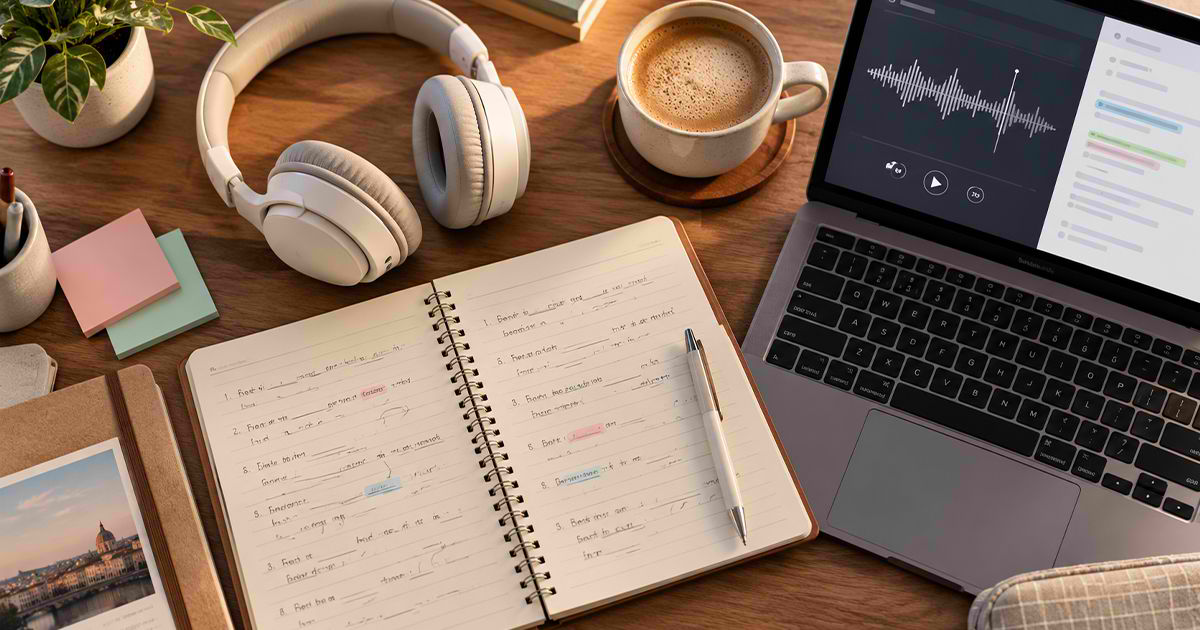
Common Mistakes to Avoid During English Dictation Exercises
Although English dictation exercises are straightforward, certain learning habits can reduce their effectiveness. Recognizing these mistakes early can help you develop better listening strategies and make your practice sessions more productive.
Choosing Recordings That Are Too Difficult
One common mistake is selecting advanced listening materials before developing basic word recognition skills.
Fast conversations, unfamiliar accents, and complex vocabulary can overwhelm beginners, making it difficult to identify even familiar expressions.
Instead, begin with recordings where you understand most of the overall message. Introduce more challenging materials gradually as your listening abilities improve.
Looking at the Transcript Too Early
Reading the transcript before completing the dictation removes one of the activity’s main benefits: training your brain to recognize spoken words independently.
Although transcripts are valuable learning resources, they should primarily be used after attempting the exercise.
Try listening multiple times and making a genuine effort to complete the sentence before checking the correct answer.
Focusing Only on Spelling Mistakes
Spelling accuracy matters, but dictation practice should also develop listening comprehension.
A learner might spell a word incorrectly because they do not recognize its pronunciation, not because they lack spelling knowledge.
When reviewing mistakes, distinguish between spelling problems, unfamiliar vocabulary, and difficulties identifying spoken sounds.
This approach helps you focus on the areas that genuinely need improvement.
Ignoring Small Words and Grammatical Endings
English learners frequently overlook articles, prepositions, contractions, and word endings during listening activities.
Words such as “a,” “the,” “of,” and “to” may become less noticeable in natural speech. Similarly, plural endings and past tense markers can be difficult to recognize.
These small details are important because they influence grammatical meaning and sentence accuracy.
Careful dictation practice trains you to notice sounds that might otherwise go unnoticed.
Practicing Inconsistently
Completing a lengthy dictation exercise occasionally may be less useful than maintaining a short, consistent practice routine.
Daily exposure helps reinforce familiar vocabulary and pronunciation patterns.
Rather than attempting several difficult recordings in one session, establish a realistic schedule that you can maintain throughout the week.
Consistency and thoughtful review are more important than completing a large number of exercises.

Best Techniques to Make English Dictation Practice More Effective
Improving listening comprehension requires more than repeatedly playing audio recordings. The techniques you use during dictation can influence how effectively you recognize words, understand pronunciation, and retain new language patterns.
The following strategies can help make your daily English listening practice more focused and productive.
Listen Before Writing
One of the most effective techniques for English dictation practice is separating general listening comprehension from detailed transcription.
When you immediately begin writing, your attention becomes divided between understanding the speaker and recording individual words. This can make it difficult to follow the overall meaning.
Instead, listen to the recording once without writing anything.
During this first listening, focus on the main idea, the speaker’s intention, and any familiar expressions.
For example, if you hear a short conversation about booking a hotel room, try to identify the situation before attempting to transcribe specific sentences.
Once you understand the context, play the recording again and begin writing.
This technique can help you:
- Recognize important vocabulary through context.
- Understand the overall message before focusing on details.
- Reduce unnecessary pauses during transcription.
- Develop stronger connections between spoken sounds and meaning.
For beginners, this approach is particularly helpful because it prevents the exercise from becoming an isolated spelling activity.
As your listening improves, try completing the first listening at a natural speaking speed before replaying difficult sections.
Check Your Answers with Transcripts
Transcripts are essential tools for identifying listening mistakes and understanding unfamiliar pronunciation patterns.
After completing a dictation exercise, compare your written answer with the original text carefully.
Rather than simply counting incorrect words, examine the reasons behind each mistake.
Suppose the recording contains the sentence:
“She has been working here for three years.”
However, you write:
“She is working here for three years.”
This difference might indicate difficulty recognizing the reduced pronunciation of “has been” in connected speech.
Reviewing the transcript helps you identify the grammatical structure and understand how it sounds in natural conversation.
An effective transcript review involves three stages:
- Identify the differences: Highlight missing words, incorrect expressions, and spelling mistakes.
- Investigate the causes: Determine whether the problem involves pronunciation, vocabulary, grammar, or listening speed.
- Listen again: Replay the recording while following the transcript, then listen once more without reading.
Keeping a simple record of recurring mistakes can also improve your learning efficiency.
For example, if you consistently miss contractions such as “I’ve,” “we’re,” or “they’d,” dedicate additional practice sessions to recognizing these forms.
Over time, this targeted approach can help strengthen both listening accuracy and grammatical awareness.
Practice with Different English Accents
English is spoken with a wide variety of accents around the world. Pronunciation, rhythm, intonation, and certain vowel sounds can vary significantly between speakers.
Learners who practice exclusively with one accent may find it difficult to understand unfamiliar pronunciation styles during real conversations.
For this reason, incorporating different English accents into your dictation routine is an effective way to develop more flexible listening skills.
Some useful accents to explore include:
- American English: Helpful for understanding many American podcasts, films, and everyday conversations.
- British English: Introduces different vowel sounds, pronunciation patterns, and speech rhythms.
- Australian English: Provides exposure to distinctive vowel sounds and natural conversational pronunciation.
Begin with the accent you understand most comfortably. Once you can recognize familiar words consistently, introduce recordings featuring other accents.
For example, you might practice American English on Monday, British English on Wednesday, and Australian English on Friday.
The objective is not to imitate every accent perfectly. Instead, focus on recognizing familiar vocabulary even when pronunciation changes.
Listening to the same or similar sentences spoken in different accents can help you notice these differences more clearly.
As your confidence develops, gradually include recordings with varied speaking speeds and more natural conversational expressions.
This approach prepares you for real situations where English speakers may come from different countries and linguistic backgrounds.
Frequently Asked Questions
How often should I practice English dictation to improve my listening skills?
Practicing English dictation for 10 to 15 minutes each day is a practical starting point. Consistent practice allows you to review pronunciation patterns, recognize familiar vocabulary, and gradually improve listening comprehension. Adjust the duration according to your level and available time.
Is English dictation suitable for beginners?
Yes. English dictation can be useful for beginners when the recordings contain simple vocabulary, clear pronunciation, and short sentences. Starting with familiar everyday topics makes the activity more manageable and helps learners build listening confidence.
Can English dictation improve speaking skills?
Dictation primarily develops listening accuracy, but it can also support speaking development by increasing awareness of pronunciation, sentence rhythm, and connected speech. Reading the corrected transcript aloud or repeating after the speaker can provide additional speaking practice.
Should I use subtitles or transcripts during dictation practice?
It is better to complete your initial listening and transcription attempts without subtitles or transcripts. Use the transcript afterward to identify mistakes, understand unfamiliar expressions, and review difficult pronunciation patterns.
How long does it take to improve English listening skills with dictation?
Progress depends on your current proficiency, practice consistency, and the difficulty of your listening materials. Some learners notice improvements in recognizing familiar expressions within a few weeks, while developing strong comprehension of fast, natural speech usually requires more sustained practice.
Is it better to practice English dictation with short or long recordings?
Short recordings are generally more suitable for beginners because they allow focused listening and repeated review. Intermediate and advanced learners can gradually introduce longer recordings to develop concentration and comprehension of connected speech.